Simplifying Crew Travel with Trusted Data: ESVAGT's Digital Booking with Mintra
®ESVAGT 2026

ESVAGT's long-standing use of Mintra's OCS® HR system is supporting a trial to reduce manual crew travel administration. Early results indicate shorter administrative booking times, supported by continued collaboration to strengthen service.
The Challenge
ESVAGT is a Danish offshore shipping company supporting the offshore wind and oil and gas industries with a wide range of specialised services, including standby, emergency response and rescue and inter-field transfer of cargo and personnel.
The company operates a fleet of more than 40 offshore vessels with crews travelling from different countries and airports. On some vessels, staggered shift patterns mean four teams rotate through a single vessel rather than two, so crew changes and the travel that supports them are a constant operational requirement rather than an occasional task.

Since 2012, ESVAGT has worked with Mintra and its OCS HR system, holding the information at the centre of the travel booking process, including crew names, passport numbers, home airports, travel dates, sailing periods and leave activities.
Previously, Masters or appointed officers had to retrieve the relevant details from OCS, transfer them into an Excel spreadsheet and email them to a travel agent, who would send proposed flights back to the vessel for review and approval. For a single crew change involving several nationalities and departure points, this could generate more than 40 email interactions.
If the vessel team was occupied with an operational task and did not respond before a fare expired, the booking process could have to start again from scratch.
ESVAGT wanted to make life easier for the people arranging travel, reduce the time spent transferring information and going back and forth with the travel agent, and eliminate the risk of human error that comes with entering the same data more than once by working from a single, trusted source.
The Solution
ESVAGT began trialling digital travel booking platforms and selected the Rotterdam-based crew travel platform C Teleport in January 2026, starting with two vessels. A key requirement from the outset was that the platform could draw directly on the information already held in OCS, rather than asking vessel teams to re-enter it elsewhere.
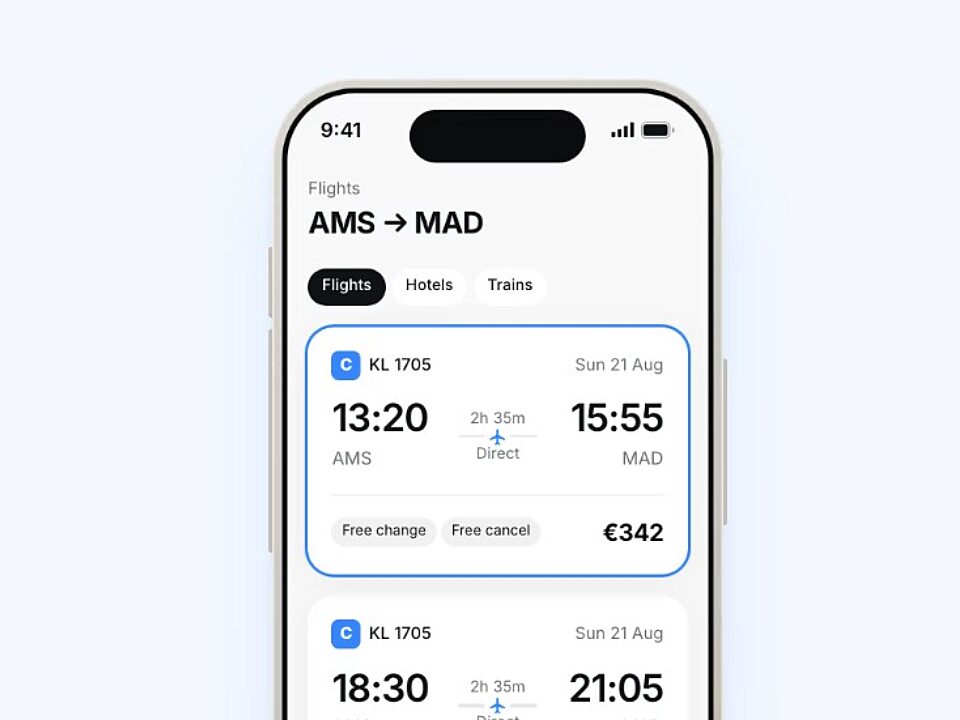
Through an Application Programming Interface, or API, the required data is shared securely between the two systems each day, including crew names, passport details, home airports and planned travel dates. The person arranging travel can then search for flights, review available routes and apply filters such as fare type, marine fares and stop-over times, before completing the booking directly through the platform.
Mintra has supported integrations between OCS and a wide range of external systems for more than 20 years, as customers' operational requirements and supplier relationships have evolved. For ESVAGT, this solution requires system integration at a level not previously implemented with Mintra. The trial therefore places new demands on integration quality, specialist resources, ownership and response times. Its value depends both on reliable information in OCS and on a stable, continuously supported connection with C Teleport.
Morten Broch, Product Director, Mintra explains, "The value is not simply in connecting two systems. It comes from having reliable workforce information that is structured correctly and maintained in one place. That gives customers the flexibility to work with the providers that meet their needs, without creating additional administration or asking people to re-enter information that already exists."
Andres Eli Olsen, Fleet Manager Crew, ESVAGTThe integration was the most important thing. This wouldn't be possible if we couldn't do the integration with OCS. "

Inside the Booking Process
Day-to-day, the process starts as soon as a crew change is planned in OCS. Once travel dates and sailing periods are confirmed, the required information is with C Teleport. The current trial is testing whether this transfer performs consistently and provides reliable booking data for operational use.
Selecting a vessel brings up a list of the crew planned for that change, along with the home airports already held against each person's record in OCS, so there is no need to look them up separately. The user can choose to search on-signers, off-signers or both, and narrow results using filters for marine fares and maximum or minimum stop-overs, with the system recommending the cheapest suitable option. Hotel bookings can be arranged through the same platform, though as a separate booking from the flight itself.
The system is also built to handle the unexpected. If a crew member falls ill before a booking is confirmed, the relevant activity can simply be marked as such in OCS, and the export will not pick it up. If a cancellation is needed after a flight has already been booked, it can be cancelled with a single action rather than a further round of emails.
The Result
Where the integration operates as intended, the trial reduces the number of manual steps involved in arranging crew travel. Previously, the person making a booking had to retrieve information in OCS, enter it into Excel, prepare an email, wait for a proposal from the travel agent, and then review and approve the suggested journey. With the required crew information now available in the travel platform itself, the user can focus on selecting the most appropriate and cost-effective travel arrangement.
ESVAGT has seen a significant reduction in the administrative time required to arrange crew travel through the platform. The streamlined process reduces email exchanges, manual data handling and approval steps compared with the previous approach. The platform also allows routes for several crew members to be searched within the same booking flows, supporting more efficient planning for crew changes involving different departure locations and travel requirements.
In addition to the increased speed, other benefits reported by ESVAGT so far include:
- A significant reduction in email traffic and manual data entry for each crew change
- A single, shared view of upcoming bookings by date or vessel, without searching through historic correspondence
- Greater flexibility to manage last-minute changes, including sickness and cancellations, directly within the system
- Access to reporting on ticket prices and emissions to support ongoing evaluation of the trial
Andres Eli Olsen, Fleet Manager Crew, ESVAGTThe captain is able to sail his vessel instead of making travel arrangements. "

More Control for Vessel Teams
At ESVAGT, crew travel has traditionally been arranged by the vessels, with the Master either making the booking or appointing an officer to manage it. This vessel-led process makes direct online booking particularly relevant, as the vessel team can review available options directly and weigh up factors such as arrival times, connections, baggage and the wider operational implications of the trip.
Feedback from one of the Masters: "Using the system so far has been positive, particularly around the clearer overview it provides of bookings for upcoming crew changes."
A Trial Based on Operational Results
ESVAGT began the trial with a small number of vessels to gather operational and technical feedback before deciding whether to extend the approach. At the time of writing, six vessels are actively using the platform. ESVAGT's decision on further implementation will reflect a broader assessment of operational, commercial and technical factors.
ESVAGT is assessing the experience against its existing travel arrangements, including the time required to make bookings, the cost of the service and the price of the tickets themselves. ESVAGT has spent recent years working to optimising travel costs through earlier booking and the selective use of marine fares. The evaluation will assess whether the new platform can support and further strengthen this approach.
Early feedback has been positive, particularly in relation to ease of use, visibility and reduced booking administration. The trial represents a new level of technical integration in the long-standing relationship between ESVAGT and Mintra. It also provides valuable learning about the importance of stable integrations, clear technical ownership and responsive support in modern crew management software. These capabilities are essential for maintaining reliable operations and achieving sustainable administrative efficiencies over time.

Building on Accurate Information
The ESVAGT trial demonstrates the potential value of maintaining accurate crew and employee information in a structured system. The travel platform provides the booking capability, and the API allows the secure synchronisation of information between systems. However, the effectiveness of this integration is directly affected by the quality and accuracy of the information exchanged, making a structured system like OCS essential to maintaining reliable data.
When information is maintained accurately in OCS, vessel teams avoid repeatedly transferring it to spreadsheets, emails and external platforms. This reduces manual administration, limits data-entry errors and allows experienced personnel to focus on vessel operations. For ESVAGT, reliable information in OCS provides the foundation, while the integration enables that information to support the booking process.
About OCS®
Drawing on more than 30 years of industry experience, Mintra has worked closely with customers worldwide to develop OCS® as a complete crew management software solution for the shipping and offshore industries. OCS® helps organisations ensure they have the right people in the right place at the right time, managing employee data, crew rotation planning and competence requirements, while integrating with payroll, training and travel booking systems to support seamless operations. Mintra's technologies support the operation of more than 1,800 vessels, ranging from tankers, cargo and passenger ships to semi-submersibles and research vessels.

Insights & News